For one of this year’s creativity days, our designers Anabel Twitchell Requena, Sam Pearce and Melissa Bratton decided to have a group trip to Birmingham to explore a range of bars and restaurants. Taking time away from the office for inspiration is something we actively encourage at ABDA Design, as we believe that this really helps with creativity and overall team wellbeing.

Investing in creativity

Sam loves that the team are given this time back to invest in their own creativity. She told us: “I believe that creativity is something that can be built up over time when involving yourself in creative activities and experiences, and likewise it can lessen over time when not doing so. Being more creative allows us to think outside of the box and produce more unique ideas.”

Discovering design stories

The first stop of the creativity day was at a venue called The Mailbox, which was built on the location of a railway goods yard and was originally the site of the Royal Mail’s main sorting office. It was part of a £150 million redevelopment in Birmingham and opened in 2000. This is the UK’s largest mixed-use destination outside of London. Within this venue, our designers explored a number of different areas including Medicine, Castle Fine Art and Restaurant at the Woods as well as the public areas within The Mailbox.

Time for luxury

The highlight of the day was lunch at Six by Nico. Earlier this year, our director, Claire Smith recommended that Anabel check out the book ‘Unreasonable Hospitality’ by Will Guidara. This opened Anabel’s eyes to another level of hospitality that she wasn’t used to. She was so blown away by how much she could relate to it and knew that for her creative day she wanted to explore luxury dining.
At Six by Nico, they offered a six-course tasting menu. The team chose to visit there because they wanted to explore the luxury restaurant interiors and look at how they could implement the detail into future design ideas.

An open theatre kitchen

As Sam works predominantly in the catering side of the business and Anabel and Melissa focus on interiors, they felt that Six by Nico gave them inspiration for both sectors, with its open theatre kitchen being visible from where they were seated. Sam was able to see the functionality of the kitchen, as well as being able to experience a luxury restaurant experience that will help them all as they work more with restaurants and dining spaces offering this level of service.

Anabel told us: “The biggest inspiration I took from this day was the level of hospitality we received at Six by Nico. The whole experience was so well thought out, from start to finish. And the interior design was 10/10! The way the staff looked after us and explained each dish made it so memorable. The interior of this restaurant showed me how important it is to pay attention to every detail, and I felt very inspired to design with luxury in mind. We are always encouraged to consider new ideas, and this definitely dusted off my creative gears.”

Thinking about future designs

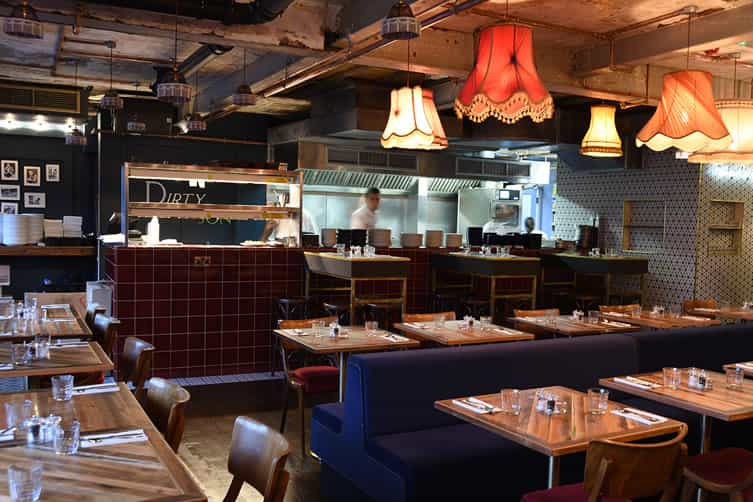
Whilst in Birmingham the team explored a few additional bars and restaurants to see how the interior design was approached. Each venue had a very different theme and interior to offer, and they discussed what they liked and disliked so that they could take inspiration for their own future designs and know what to avoid.

For anyone struggling with their creativity, Melissa said: “A great way to get creative again is to look in new places for your inspiration. This could be going out to see something new physically such as other restaurants like we did, or this could be digitally on Pinterest or subscribing to magazine platforms for interiors and hospitality.”

Those who work in the industry will know that projects can take a number of years to complete and the ABDA Design team have been working for some really exciting clients recently. The last few years have been our busiest ever and we’ve worked right across different sectors in hospitality.

To help you learn more about the work we have been doing, we have put together a collection of some of our work in our hotel, bar and leisure portfolio. This includes some work which will soon be live, recently completed projects and our old favourites to give you a full flavour of what we do.

Download the hotel, bar and leisure portfolio

We have an immensely talented team at ABDA Design and this document highlights the level of work we have produced for some prestigious clients. If you would like to learn more about how we could help you, get in touch via our Contact Us page.

The team at ABDA Design has put their extensive design knowledge, creativity and skills to good use by working on an exciting collaboration. R&S Robertson is a distinguished supplier of decorative lighting products for the contract hospitality market. To celebrate reaching a momentous milestone they have launched a new and innovative collection called “85 by R&S.”

This exceptional collection marks the culmination of 85 years of trading, and to celebrate this remarkable journey, the company embarked on a new and exciting design project in collaboration with 16 interior designers based in the UK. This included two of our talented designers, Annie Wearn and Anabel Twitchell-Requena. Via online meetings, our duo shared some invaluable insights into the ever-evolving trends, favoured finishes, and lighting styles that are highly sought after in the world of hospitality design.

Once all the research calls had taken place it was over to the R&S Robertson team to turn this new knowledge into “85 by R&S.” This collection marries the timeless elegance of the Art Deco era with a contemporary twist. The pieces in this collection are adorned with captivating colour-washing, elegant matte finishes, intricate textures, masterful etched details, and the timeless charm of reeded glass. The new range has launched with five lighting families, each inspired by the places, people, architecture, and design that defined the iconic Art Deco movement.

Senior designer at ABDA Design, Annie Wearn said: “I love this collection and it’s really special to know we played a part in bringing it to life. It includes the classic black and brass lighting which hospitality designers often opt for but it’s the coloured lighting that I love most about this new range. It’s modern meets traditional so it ticks every box for a designer. These products are also really sturdy, and you can see and feel how good the quality is. There is also so much variety that they could be used in many different scenarios, especially as each product can be customised.”

Anabel Twitchell-Requena, designer at ABDA Design commented: “Annie and I are quite different in our design styles, so it was really beneficial for us to work together on this and share ideas. I think it was really good for R&S Robertson to get the research from interior designers and I really liked the approach they took in asking us lots of questions. It felt like it was just creative people chatting and was really fun to do. The end result is amazing, and I can’t wait to include some of this range in a future project.”

Michael Lawrence, marketing & product manager at R&S Robertson added: “We are so proud of the “85 by R&S” collection. We believe that looking to the future with a new and innovative range was the perfect way to celebrate our special milestone. For us to continue in this market for another 85 years, it’s vital we are talking to our customers and looking at future design trends. We are so grateful for the input from ABDA Design. The feedback since we launched has been incredible with a lot of love for both the Hudson and Phi ranges.”

This new collection is now available on the R&S Robertson website.


Can being surrounded by art help someone to improve their creativity and wellbeing? From paintings and sculptures to the bold colours of nature, does what surrounds us influence our ability to think innovatively?

Behind the science

Researchers at University College London conducted a series of brain-mapping experiments, led by neurobiologist, Professor Semir Zeki[i]. During this study, volunteers underwent brain scanning whilst viewing a series of 28 pieces of art. The scans showed that viewing art triggered a surge of dopamine which results in feelings of pleasure and satisfaction. It appeared that the reaction was almost immediate.

A day of art

One of our senior designers, Michael Hall loves exploring art and so for his annual creativity day, he knew exactly where he wanted to visit. Michael went to the David Hockney exhibition at Lightroom Coal Drops Yard at Kings Cross in London. The room is a very large box with projections of David Hockney’s work past and present.

Michael said: “It was great to be fully surrounded and immersed by the art. Some of the work was animated and flew around the space. The whole experience lasted about one hour and included a talk by David Hockney which was really interesting. I learned a lot about working with 4th dimension which changes the standard view of perspective by capturing multiple viewpoints at a time.”

The second part of his day was at the Brian Clarke exhibition called “A Great Light” at Newport Street Gallery. Michael loved seeing the colourful and vibrant stained glass and collages and felt the scale of the art was incredible and inspiring; almost like an escapism from winter.

Inside a painting

Michael chose an arty experience to see what it felt like to be inside a painting. There is a trend for projected room art, but this was the first time Michael had seen one. The Lightroom was also close to Coal Drops Yard and there are lots of new developments near King’s Cross, so he took the opportunity to research this area. Michael also wanted to visit Damien Hirst’s Gallery and stopped at the graffiti tunnel on his way there.

Back at the office

Thinking about what he experienced that he could bring back to the workplace, Michael commented: “The gallery had a Damien Hirst café, and it was interesting to see the finishes, furniture and lighting brought together as a pharmacy interior. I had never seen anything like it before.”

Michael loves how the new ABDA Creativity Days allow both him and the rest of the team the time to do something they would rarely find the time to do. If someone is struggling with creativity Michael’s top piece of advice is to put aside some time to switch off from day-to-day life, even something as simple as finding a different space to be in can really help with creativity.

A report called What is the evidence on the role of the arts in improving health and well-being?[i] was published by the World Health Organisation in 2019. This explored over 3000 studies from around the world and it highlighted that the arts play a role in improving health and wellbeing. We have loved seeing so many of our team turn to the arts for their creativity days whether that’s enjoying the work of others or having a go themselves.

[i]Alleyne, R. (2011). Viewing art gives same pleasure as being in love. The Telegraph8.
[i] Fancourt, D., & Finn, S. (2019). What is the evidence on the role of the arts in improving health and well-being? A scoping review. World Health Organization. Regional Office for Europe.

“The desire to create is one of the deepest yearnings of the human soul.” Dieter F. Uchtdorf

The creative juices have been flowing at ABDA Design as more of the team have been enjoying their creativity days. Ensuring team members book days off for creativity is actively encouraged and we love seeing the different ways the team use their time. Sam and Anabel recently enjoyed taking part in a pottery painting class. At the start of the day, they were able to choose from a variety of pre-made clay objects before having a painting tutorial. It was then over to them to be as creative as they wanted with their own designs.

Inspiring designs

There was a lot of inspiration in the pottery studio itself, from previous works to a Pinterest page to help the painters look for ideas. Anabel chose to paint a spoon rest, as she loves cooking and wanted to decorate something that she would actively use. She reflected back on a trip to Italy last year which inspired her design, and she loved being able to experiment with a different medium she wouldn’t normally use in her day to day job. She told us: “It was more challenging than you might think as you don’t know exactly how the paints will transfer after burning the clay in the kiln. We felt very relaxed whilst painting and weren’t thinking about our to do lists.”

The science behind crafting

We love how Anabel and Sam chose to do something craft based. Scientific studies have shown that tactile sensations can light up areas of the brain that are associated with creativity and problem solving. Touch can also arouse emotions and improve mood and mindset. Hands on experiences provide a way for individuals to express and explore their creativity so this was a great choice of activity.

In a relevant literature review, Stuckey and Nobel (2010) highlighted that participation in art activities including painting is linked to improved mood and cognitive function.

Another study which was published in 2015 Alexander Schlegel and eight others at Dartmouth College, USA and Beijing Normal University, China, looked at the impact of visual art on behaviour and changes in brain activity. They discovered that a group of undergraduate students who were given introductory painting or drawing lessons showed improved creative thinking compared to students who were taking introductory organics chemistry classes.

Exploring architecture

Once the painting workshop was complete, the duo went to Harrods to look at the incredible architecture and amazing interiors. Anabel said “The food hall and Prada café stood out from everything else. I felt so inspired by the Prada café as it was a design risk that in my opinion paid off. Not many designers use one colour to decorate the interior and they used it everywhere; it was very impactful and unusual. Seeing this has definitely inspired me to take a different approach within future designs.”

Future creativity

When it came to choosing how to spend the day, Anabel chose this as she has always loved painting and wanted to remind herself of something she liked doing as a child. Thinking back to a memorable travel experience helped her to relax too. She found the day was beneficial as it allowed her to disconnect and do something creative which can be hard if you are working on a particularly technical project. It has already encouraged her to think about different ways she could spend future creativity days.

ABDA Design are a leading creative design practice with an established reputation throughout the Hospitality, Hotel and Food Service industry for consultancy and delivery.

A fantastic opportunity has arisen for an experienced catering designer looking to take the next step and challenge themselves in a creative and rewarding environment, working with our team on a variety of exciting projects across multiple sectors throughout the UK.

Working closely with colleagues and clients, the successful candidate will manage fellow designers to lead commercial kitchen & food service projects from concept to completion.

The ideal candidate will be able to demonstrate proven experience within the commercial catering design sector, a high degree of autonomy, ability to develop inspiring creative and practical solutions, with a keen eye for detail and excellent technical awareness.

You will have extensive knowledge of all leading catering equipment manufacturers available within the UK, including both standard and bespoke equipment with an excellent understanding of the design process including installation of equipment on site, being able to deliver projects from concept to completion.

You will be able to show good leadership skills, be articulate with excellent written and verbal skills, be confident meeting clients and contractors, you will have a good understanding of food hygiene and related sustainable design, statutory approvals (EHO, building regulations, planning & CDM2015), be fluent in industry recognised drawing software.

Responsibilities will include preparing creative design solutions for both kitchen and food service areas, production of drawings, 3d visuals, schedules, technical specifications, cost management and building and maintaining client relationships.

The position is Full Time/Permanent and will be primarily office based with the opportunity of hybrid and flexible working however, you will be expected to undertake site visits and attend meetings throughout the UK.

The remuneration package will be competitive and dependant on experience, the successful candidate will benefit from a competitive salary package, company car, private healthcare and generous company pension scheme.

To find out more about this role or to apply please contact our design director, Richard Steade via richard.steade@abdadesign.co.uk.

Educating the wider industry is one of our key values at ABDA Design. Across our team, we have decades of knowledge and experience that we use to guide our clients through a project and to help us create stunning designs that create those memorable moments for consumers. We are delighted that our director, Claire Smith has been asked to share some of this expertise on the Innovation Stage at the Independent Hotel Show on 17th October.

As we put science at the heart of all our designs, Claire has teamed up with consumer psychologist and hospitality industry expert, Karen Fewell. They’ll be sharing the stage to present the insightful session ‘Inside the mind: Understanding the psychological impact of hospitality design’.

We all know that wellbeing is high on the agenda for today’s hotel guests. In this thought-provoking talk you will be able to find out how applying psychology to your design decisions has a huge impact on your guest’s behaviour and mood. From simple, inexpensive interior changes to starting-from-scratch choices, this unmissable session will help you understand the subtle signals your interiors are sending. You can send your questions in advance for this session if there’s a particular area you would like to learn more on.

Karen specialises in branding and marketing strategy for food, drink and hospitality brands together with helping clients to understand consumer behaviour and how to apply psychological principles to successful business activity. Karen combines the science with creative business ideas to drive results. Taking advantage of the various lockdowns, Karen used this time to study a Masters in Consumer Psychology.

Claire Smith, director at ABDA Design said: “At ABDA, we love working on hotel designs, whether it’s restaurants and bars, bedrooms, communal areas or outdoor spaces. For us it’s about ensuring that hotel guests enjoy making memorable moments and our designs play a huge part in this. That’s why I can’t wait to visit and speak at the Independent Hotel Show as it gives us an opportunity to share our expertise with others who are passionate about hospitality experiences. Our design team ensure that science is at the heart of all the decisions we make when researching and designing projects and I’ll be revealing a few of our secrets at the show.”

Karen Fewell, director, Digital Blonde commented: “Whenever I’ve been part of The Independent Hotel Show it’s provided ideas and inspiration. It’s a great place to keep up with the latest hotel trends so I’m looking forward to getting on stage again and sharing my knowledge with others. Over the last few years, I’ve been studying for a Masters in Consumer Psychology, and I love being able to put this into practice to help the hospitality industry learn more about human behaviour. The environments we surround ourselves in can have a big impact on our wellbeing and mood and this scientific knowledge is something I’m extremely passionate about sharing with others.”

Head to the Independent Hotel Show website to find out more about the event and add this session to your calendar.

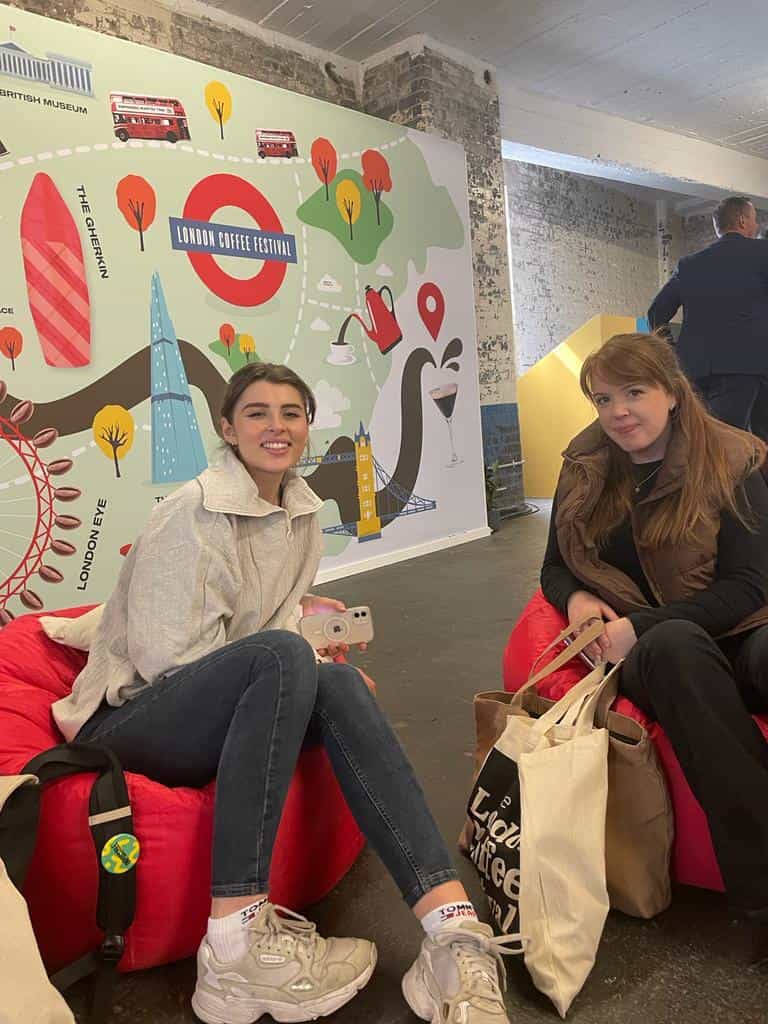
Last month, the London Coffee Festival was the place to be to discover some of the latest trends in hospitality. It’s an event which the ABDA team visit each year as it’s a fantastic source of inspiration. Taking place at The Truman Brewery, and running over four days, guests can enjoy talks, demos, masterclasses and hear about the latest food and drink products.

ABDA designer, Anabel Twitchell Requena felt that the strongest theme at this year’s event was sustainability with a huge spotlight on products that were more eco-friendly. A lot of companies are trying to make products recyclable, or they are made using recycled products. Anabel believes that visiting the event helped with her creativity as she saw so much variety in products and branding which give her a better understanding of what’s new in the market.

Our industry placement student, Abi Newton also joined us at the event and said: “It was great to see new products within the café scene. Simply being at the festival promotes creativity as you are surrounded by like-minded people in a positive atmosphere. It’s great to interact with the products and learn what people are drawn to and what is currently trending.”

Abi agreed that there was definitely a strong movement towards sustainability, but there was also a large focus on being all inclusive for dietary requirements including gluten free, dairy free and nut free. She also noticed lots of brands promoting their products as organic with natural ingredients.

Rachael Sheldon finds the London Coffee Festival an inspiring place to visit due to the diverse collection of people whilst everyone has a general love of coffee and food. She felt that this year the food/snack section was particularly exciting as it was incredibly busy and had a great buzz about it. She found it really motivating to talk to a lot of different people about their products and company ambitions.

A product that stood out for Rachael was Rapscallion Soda which is a flavoured soda from Scotland. Speaking about why they stood out she commented: “Their branding was fantastic; they had a really enthusiastic team and have just received more investment to drive the business. The drinks tasted great so hopefully we will see this brand in supermarkets and cafes soon.”

Our director, Claire Smith also found the London Coffee Festival helped with her creativity as there is such a strong vibe at the event. She said: “There was plenty to see in terms of new products and lots of goodies to try. The DJ was playing some popular tunes and of course the unusual venue of Truman Brewery always adds to the experience.”

After visiting the show, Claire and some of the design team had a research afternoon where they explored some places around East and West London. Lots of photos were taken and shared with the team as another source of creativity. The best way to discover what consumers want is to go and experience hospitality for yourself.

You can see some of the highlights from this trip on our Instagram channel at www.instagram.com/abdadesign

The dictionary defines luxury as ‘a state of great comfort or elegance, especially when involving great expense’ but in today’s world does it mean the same to everyone? Defining luxury in hospitality can be challenging if people from different walks of life want to indulge in their own ways. This was the focus of a session on “The ‘new’ luxury in hospitality experiences” at the recent Hotel, Restaurant and Catering Show – where ABDA’s Director Claire Smith chaired a panel of experts to share their joint insights.

Claire was joined by: Charlotte Raffo, Founder – The Monkey Puzzle Tree, Zaynib Khan, Architect and Senior Associate Director – Benoy and Sam Edwards, Director of Capital Projects – Fifty Five Hospitality. Here are just a few of the highlights and key takeaways from the session.

The differing definitions of luxury

Claire kicked off the discussion by asking each panellist to talk about what luxury meant to them personally. She joked that for her “luxury is being able to lock myself away and not talk to anyone for 24 hours!”

The concept of luxury means something different to each of us though and for Charlotte Raffo it was all about an authentic experience. She explained: “For me luxury is experiencing something unique and memorable that I can’t find elsewhere (even if it’s actually just down the road). I feel like the standard of basic design and hospitality is often so high and consistent now, that luxury has to offer something with real meaning. If that’s abroad I want it to really reflect the local culture, and not be someone else’s idea of identikit glamour. I’m looking for an exciting narrative that you can look forward to.”

Luxury doesn’t have to be all about grand design features, it’s often the smallest things that have the most impact. Sam Edwards gave his view: “For me it’s all about the little moments of luxury, the personalised service, the arrival note in the bedroom, the feeling of being genuinely relaxed and looked after with amazing food, of course!”
Echoing the theme of simplicity when it comes to luxury, Zaynib Khan was looking for “a one to one experience – something that will change my behaviour.”

How the concept of luxury has changed

The differing definitions of luxury show just how much the concept has changed over the years. As Sam Edwards put it “Does luxury mean super fluffy bath towels and high end in room products, caviar bellinis and champagne? Or laid back, quiet spaces, a seamless online booking, relaxed but attentive service and privacy?”
The changes to the way we live and the pace of life also contribute to how luxury has changed. Sam Edwards continued: “People want to spend more money on special experiences, this might be an off grid cabin on a secluded island, having a tailored stay of nutrition, exercise and wellness, or a day spent in a vegetable garden. Perhaps these days luxury is slowing down, feeling wholesome and being involved in nature.”

From an architectural perspective, Zaynib Khan felt the current process of creating a luxury experience in the hospitality sector was very much dependent on the geographic location and the guest profile. “We really look at composing experience from understanding what the guest wants and develop the story of luxury from there” she explained and added that “The hospitality experience and offer has to tie in with what else is happening in the surroundings.”

There was agreement that excellent customer service was still paramount to the luxury experience – this is something that hasn’t changed.

Levels of luxury in hospitality

With so many differing definitions of luxury, Claire Smith invited the panel to discuss whether there were different levels of luxury and how these could be defined.

Charlotte Raffo was first to tackle the topic: “There’s obviously a big difference between what you might want from business or leisure. Corporate safe luxury might be what’s needed for entertaining customers whereas if on a leisure trip you might be looking for a bit more excitement or extreme relaxation, where service is key.”

Sam Edwards brought the discussion back to service levels too, adding that “With all things there are different levels of luxury, with a price point which brings tiers of expectations. That said, there is an underlying level of luxury that should and can be achieved regardless – such as good customer service.”

The panel discussed how clearly levels of luxury could be defined, is it always something that’s intangible? Zaynib Khan gave her view: “People want to build communities and have an authentic experience with heritage cultures and experiences – it is important that there is that subjective context. However, as much as it is subjective, there are also objective elements in what a hotel offers – how many restaurants it has, where it is situated – so in some ways there are very defined parameters and metrics.”

The role of storytelling in luxury

From a design perspective, Charlotte Raffo was keen to pick up the topic of stories: “We help to create a narrative to the design. I feel like the role of our designs is to bring the character and story to the project. There might already be a strong story relating to the location of the hotel, or the history of the building or something that the brand stands for or we might have to work to create that soul. The soft touch point may be a cork wall for sound reduction and a cosy feel.”

This prompted Claire Smith to ask panellists whether storytelling was more important in luxury than other sectors of hospitality. It was a resounding yes from Charlotte Raffo: “If I stay somewhere luxurious, I want to feel a memorable connection with the space, maybe a historical element, or at least a story and a reason behind the design. I’d like to be able to go on the website and there to be more than a paragraph to read about the interior and design so that I can get really excited about it.”

The power of storytelling was equally important for Zaynib Khan, who explained: “The magic of hospitality spaces and having an incredible hotel lobby is inside out, not outside in. The story telling starts before the design comes in – where the location is – is it city centre, urban, seaside? That makes a difference to what the experience will be – what is the booking process like, the first glimpse of the hotel, the drop off area – it all matters and adds to the story.”

Balancing luxury and sustainability

The topic of sustainability cannot be ignored when it comes to luxury – guests have high expectations when it comes to both. But how do you get the balance right and deliver a luxury experience whilst mitigating environmental impact? Claire Smith was keen for panellists to share their collective insights on this important question.
Sam Edwards felt strongly that when it comes to sustainability “You’ve got to want to do it for a start.” He added that “Some of the major infrastructure changes to sustainable methods such as heating and cooling spaces via heat pumps are expensive.”

He felt that sustainable luxury in hospitality could be achieved in many ways, citing examples such as “your takeout packaging being fully biodegradable and no plastic makes for a guilt free experience, the products you use and the food you consume.”

Charlotte Raffo added to the discussion from a design perspective: “We should of course be using more sustainable options where we can, but I think it’s key to create a design that will last – and that definitely doesn’t have to mean neutral or classic. Specifying furniture that can be upgraded, reupholstered and refinished is an important aspect of this. I also think that, if possible, using reclaimed and antique pieces both adds to the sense of individuality and character of a space and also has a lasting appeal – so that it’s less likely to date and need replacing because it’s no longer on trend. Thought should also go into reducing the need for disposable consumables in the room itself, so refillable soap bottles rather than individual soaps or a beautiful water jug for example.”

Looking at the future of luxury

Keeping in mind the issue of sustainability, the panel discussed what the future of luxury might look like and what the challenges would be.

Charlotte Raffo felt creativity would always be at the heart of luxury: “Creativity comes in to make hospitality spaces more memorable and individual. For me the challenge in a luxury space is to constantly surprise and delight and create individuality but it must still hang together.”

The concept of luxury becoming more accessible now and the future of this was discussed by all. Whereas once luxury was exclusive and unobtainable, it is now more inclusive with luxury festival experiences and various options to ‘dip into luxury’, for example a twilight spa experience, rather than a spa weekend.

For Sam Edwards, sustainability and the future of luxury were deeply intertwined: “Sustainability is luxury – sustainable products are usually more expensive and that needs to change. I think everything about sustainability is luxury.”

Zaynib Khan felt the subject of sustainability was crucial to the future of luxury too, urging operators to think big: “For sustainability you need to look at the big picture – we look at it as an eco-system and it is always about building communities for tomorrow. Have a synergy with everything around the building. This could include partnering with other local businesses – florists for example.”

She added that for her the future was all about “affordable luxury and inclusive luxury.” She encouraged thinking about the circular economy and suggested “using robust materials – choose a refined material palette that can withstand trends. This is especially important in high traffic areas, so you are not replacing frequently.”

What does luxury mean to you?

Feeling inspired? Get in touch if you’d like to discuss a luxury hospitality project or hear more about our work in this area.

According to Wikipedia, the history of the pub can be traced back to Roman taverns in Britain and through Anglo-Saxon alehouses, but it was early in the 19th century that ‘pubs’, as they are today, began to appear. Pubs may have changed a lot over the years, but they remain at the heart of many communities, giving people an opportunity to come together over drinks, and sometimes food and games too.

As designers of pubs and bars, it is important we are staying on top of trends and speak to consumers, our staff, and operators about what the future of the pub looks like.


Looking ahead, our senior designer Michael Hall thinks venues will become less and less about alcohol. New pub concepts will cater for an increased range of non-alcoholic drinks. Hot beverages and coffee are also increasingly becoming part of the pub experience.

Michael told us: “I think pubs will become much more health conscious and offer vegetable juices and protein shakes too. When I played group sports, we would head to the pub afterwards and have food with a drink. I could see pubs being linked to gyms and sports venues in the future. Games and entertainment are becoming more relevant to the pub as consumers look for more of an experience.”

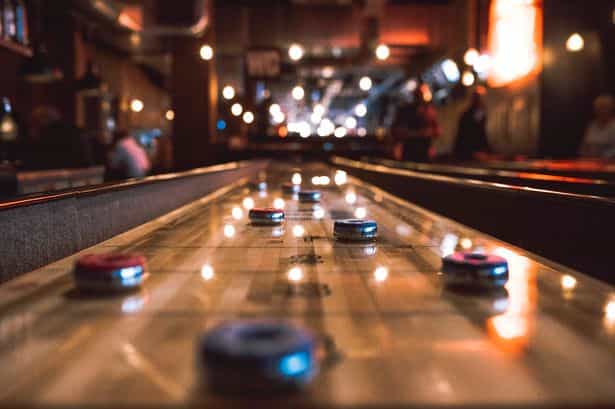
As designers we are also seeing clients wanting us to focus on well-designed food preparation areas that allow for good flow through the kitchen to improve efficiency. At the front of house, we are being asked to include games areas, live music spaces and adaptive interior finishes for projected imagery.

Sam Pearce likes it when pubs have been around for a long time, but they have adapted the interior design to have a more modern feel. She loves it when a design retains the historical features such as exposed beams or painted bricks, but they’ve refreshed the interior with modern aspects such as new flooring, stylish furniture and good lighting. Thinking about the pub of the future Sam added: “I can see the modern improvements changing with the trends, but pubs I think will always keep their authentic feel with designers retaining a lot of the existing features.”

When new pubs are being created, senior designer, Annie Wearn believes that operators want to stand out and be a bit different from the next. They are looking to create an immersive experience, not just a background for socialising. She thinks over the next five years we’ll see a mix of the modern and traditional style pub with more biophilic elements, giving that home-from-home feeling, almost like a big cosy lounge. Digital menus will become more and more popular with no requirement for the paper menu. This will also allow operators to update menus and make last minute changes much more easily too.

A pub with a clear point of difference is what our senior designer, Rachael Sheldon likes best. She was particularly taken with the Double Red Duke in the Cotswolds when she attended a gin tasting evening. It was an intimate event with a group of people round the table. The pub also had a small gin pantry room which was full of over 100 gins to allow guests a wide choice. The whole place just had a really nice ‘country pub’ feel with more to offer than just a local pub which Rachael feels will make a big difference moving forward.

When looking for a pub to visit our senior catering designer, David Hones wants something that is popular but doesn’t feel busy. He prefers a design that is clean and welcoming with good food and a theatre kitchen. When it comes to modernising pubs, he feels their strength is often that they are classic and traditional so to change its role would be a big risk. However, David also feels more modern pubs are looking at mixed venue types with games to bring in additional clientele.

If you would like to talk to one of our design team about updating or creating your pub design, then you can send us a message via the Contact Us form.